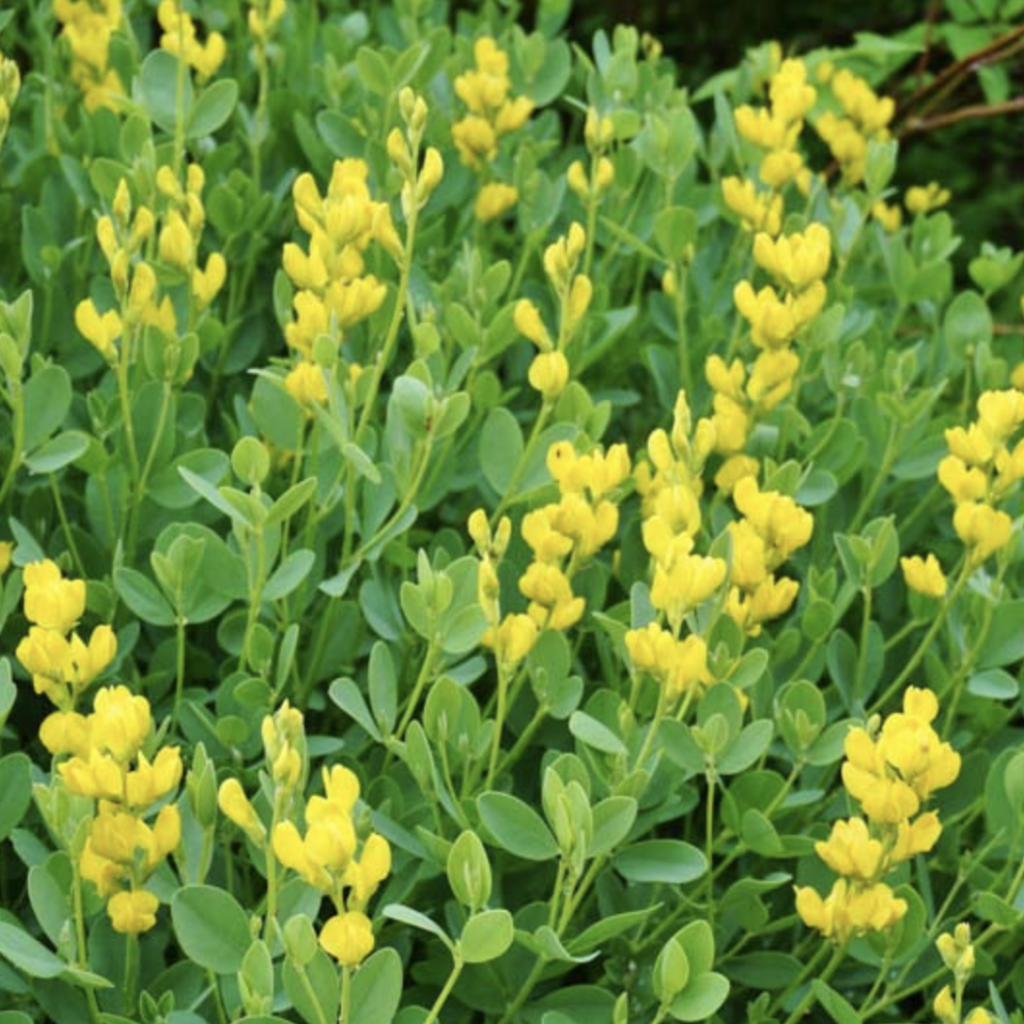
3-4 feet. Attracts a diverse mix of pollinators. A wide range of medicinal uses.
Wild Indigo (Baptisia tinctoria) can be naturally found in forested habitats, particularly along woodland borders, where they can reach heights of 2 to 4 feet. Renowned for their resilience, Baptisia species can endure high heats, drought periods, along with notable resistance to diseases. Optimal growth conditions include full sun exposure, though certain white-flowered varieties can endure partial shade. While they prefer deep, nutrient-rich soils, Baptisia varieties exhibit tolerance to poorer soil conditions.
Baptisia‘s flowers are known to attract a diverse array of insects, including butterflies, bees, and other pollinators. Additionally this plant plays a crucial role as a larval host for several butterfly and moth species, such as the Orange Sulphur, Clouded Sulphur, Frosted Elfin, Eastern Tailed Blue, Hoary Edge, Wild Indigo Dusky Wing, and Jaguar Flower Moth. These relationships highlight the diverse ways in which Baptisia contributes to the broader ecological balance.
Baptisia bracteata var. leucophaea, commonly known as cream wild indigo, has historically served various medicinal purposes. An ointment comprising seed powder mixed with buffalo fat was applied to the stomach to alleviate colic. Additionally, root tea was previously administered for conditions such as typhoid and scarlet fever. A tea, made from the leaves and stalks, was used to treat snake bites, as it has astringent and antiseptic properties, as well as to counteract mercurial salivation.
Baptisia tinctoria, was commonly used by indigenous communities for its several medicinal purposes. A root tea was employed as both an emetic and purgative, while cold tea was utilized to alleviate vomiting. The Mohegans of southern New England used a poultice made from the root was applied to relieve toothaches and inflammation, and the root wash was used for cuts, wounds, bruises, and sprains. The tea was also applied topically to alleviate leg, arm, and stomach cramps and wounds, with additional claims of stimulating bile secretion. German studies have demonstrated that extracts from the plant stimulate the immune system, although caution is advised regarding large doses due to potential harm. During the early 19th century, the U.S. Pharmacopeia included wild indigo, as doctors experimented with extracts derived from the plant to treat typhoid fever. Experimental use of root tinctures and powders resulted in symptoms resembling those of the onset of typhoid, leading practitioners of homeopathy to anticipate potential cures for the disease.
a handful of seeds per pack. from Peter’s garden
** USA Sales Only **