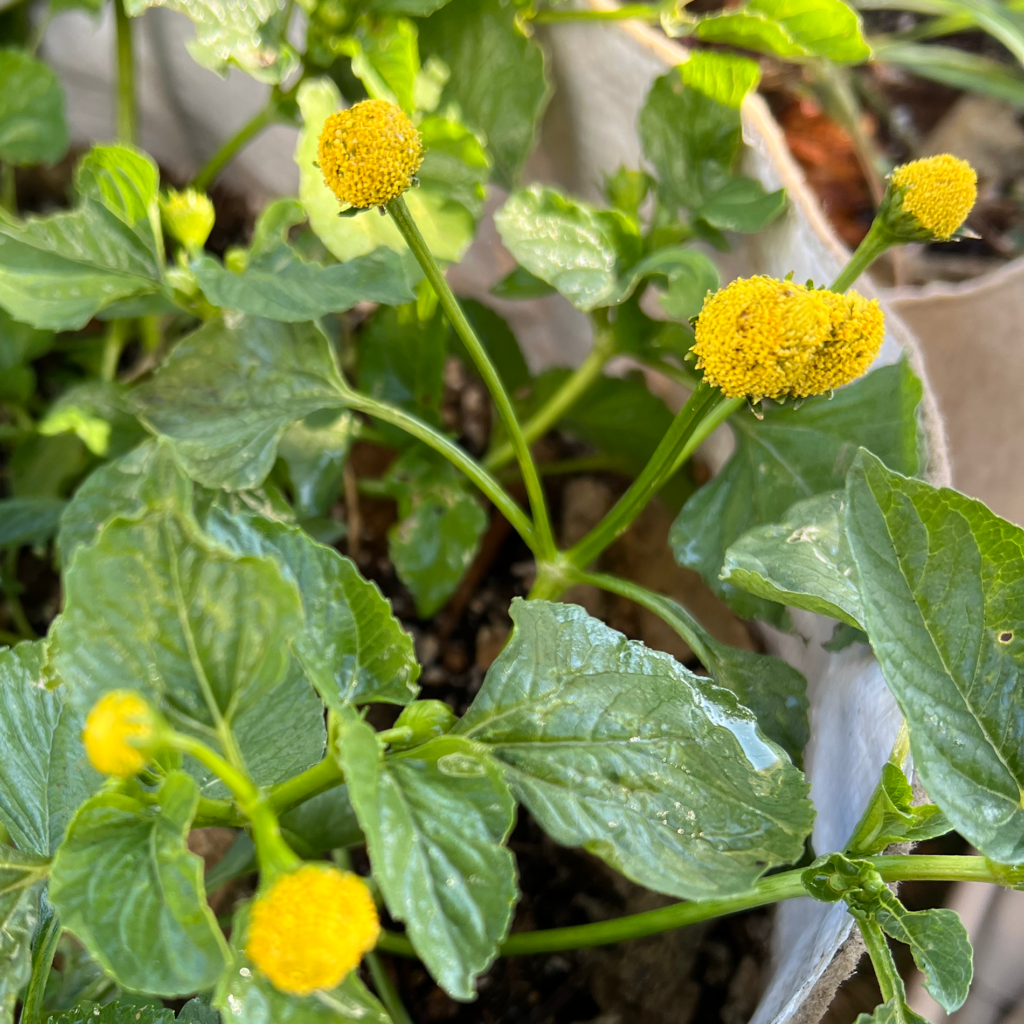
Traditionally, the plant is used for its medicinal benefits. Some of these effects have been proven by science. It’s commonly used for toothaches, but it’s also used for other issues like inflammation and gastrointestinal problems.
In some parts of the world, the toothache plant is used in food. It has a strong, bitter taste that adds a unique flavor to dishes.
When chewed, it has a numbing effect on the mouth. This local anesthetic effect is due to spilanthol, the plant’s main active ingredient.
It also has plant compounds called flavonoids. The flavonoids reduce prostaglandins, which interfere with your perception of pain.
Known for its round yellow flowers, the toothache plant has anesthetic and anti-inflammatory properties. The plant is also used as an herb or food in some parts of the world.
A handful of seeds from Peter’s garden.