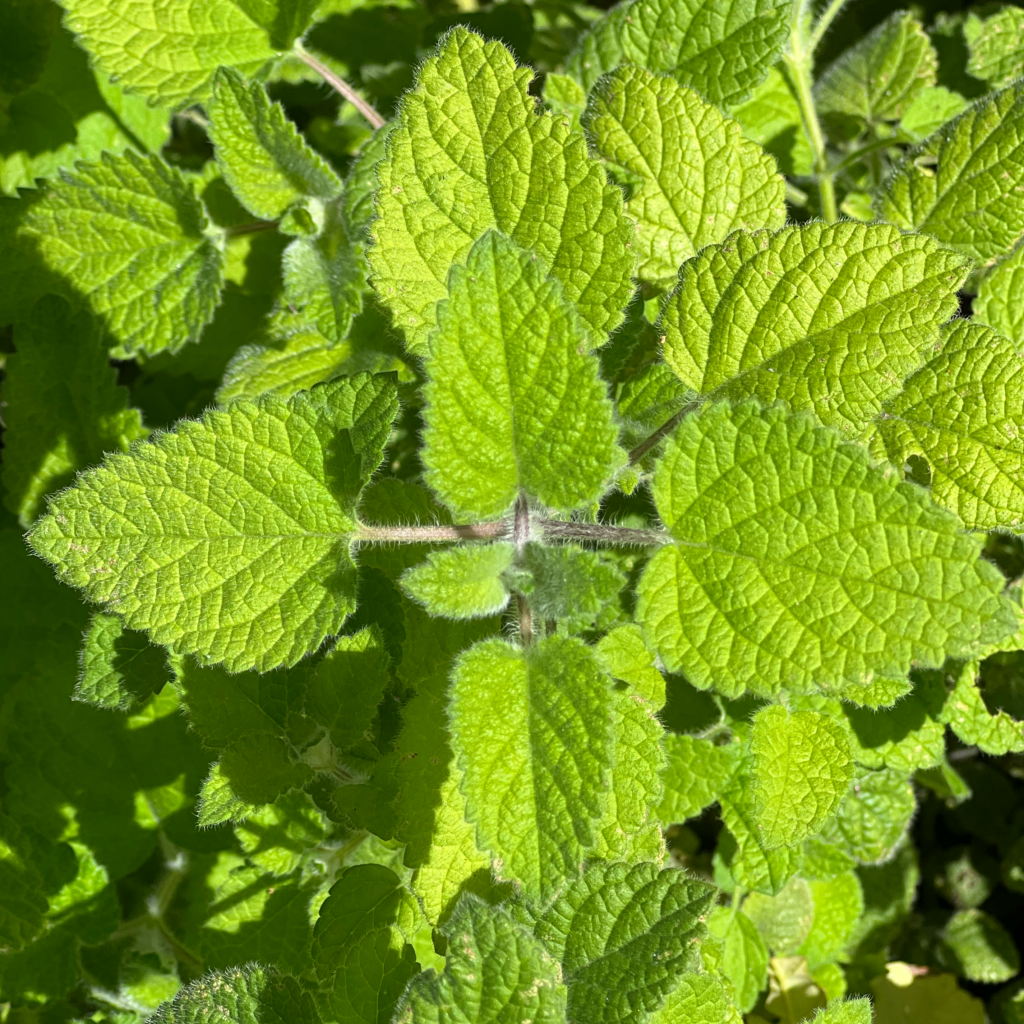
Mandarina lemon balm (Melissa officinalis ‘Mandarina’) is a distinctive variety of lemon balm that offers the familiar calming properties of its species along with a delightful, unique mandarin orange fragrance. This makes it a fascinating and fragrant addition to any herb garden or landscape.
- Aroma: Mandarina lemon balm is notable for its pronounced citrusy aroma, reminiscent of fresh mandarin oranges. This is a distinct variation from the typical lemon scent of regular lemon balm.
- Appearance: It features the characteristic heart-shaped, toothed, light green leaves of lemon balm. However, the plant tends to have a slightly lower and more spreading growth habit than traditional lemon balm. Small white flowers, rich in nectar, appear in the summer and are attractive to bees.
- Growth habit: Mandarina lemon balm is a vigorous and well-branched plant. It can be grown in containers, where its tendency to spread makes it ideal for hanging baskets or spilling over the sides of pots. It can also serve as a scented ground cover.
Benefits and uses
- Culinary: The leaves can be used fresh to impart a citrusy flavor to teas, salads, and desserts. It can be used similarly to regular lemon balm, adding a unique orange twist to recipes. You can also use it to make a calming and flavorful tea by steeping fresh leaves in hot water.
- Relaxation and stress relief: Like other lemon balms, Mandarina lemon balm is known for its calming and stress-relieving properties, making it a popular choice for teas and infusions aimed at promoting relaxation and improving sleep.
- Digestive support: It can also be beneficial for digestion, potentially helping with indigestion, bloating, and stomach cramps.
- Antioxidant properties: Mandarina lemon balm contains antioxidants that contribute to overall well-being.
- Pollinator-friendly: The flowers attract beneficial insects like bees and butterflies, making it a good choice for supporting pollinators in the garden.
Traditional and folk uses
- Nervous system: Used to reduce stress and anxiety, promote relaxation and sleep, and address nervousness, hysteria, and depression.
- Digestive system: Employed to ease indigestion, bloating, cramps, gas, and colic.
- Skin: Applied topically to treat wounds, insect bites, and cold sores (oral herpes).
- Other traditional uses: Headache relief, fever reduction, menstrual irregularities, high blood pressure, asthma, and even to attract bees.
Modern research and potential benefits
- Stress and anxiety: Studies suggest lemon balm may help reduce stress and anxiety by impacting neurotransmitters like GABA and lowering cortisol levels.
- Sleep: Lemon balm’s calming effects may aid in improving sleep quality and reducing restlessness, particularly when combined with other calming herbs like valerian.
- Cognitive function: Some research indicates lemon balm may have positive effects on memory, focus, and mental clarity, potentially through improving brain circulation and reducing oxidative stress.
- Cold sores: Topical application of lemon balm ointments has been shown to be effective in treating cold sores caused by the herpes simplex virus (HSV), accelerating healing and reducing symptoms.
- Digestion: Lemon balm’s antispasmodic properties may be beneficial in easing digestive discomforts such as bloating, cramps, and nausea.
- Antioxidant and anti-inflammatory properties: Lemon balm is rich in antioxidants, including polyphenols, which may help protect the body against damage from free radicals and reduce inflammation.
Forms of consumption
Lemon balm is available in various forms, including dried leaves for tea, capsules, extracts, tinctures, and topical creams.
Growing Mandarina lemon balm
- Planting: Plant Mandarina lemon balm in a location with partial shade and fertile, well-drained soil. It is hardy in USDA zones 4-9.
- Care: Keep the soil moist but avoid overwatering, as the plant is sensitive to wet soil. Replenish nutrients with organic fertilizer or compost every 1-2 months, especially during the growing season.
- Harvesting: Harvest leaves when the plant is at least 6-8 inches tall, being careful not to remove more than one-third of the plant at a time. Cutting back the plant after flowering encourages new growth.
Growing Mandarina lemon balm
- Planting: Plant Mandarina lemon balm in a location with partial shade and fertile, well-drained soil. It is hardy in USDA zones 4-9.
- Care: Keep the soil moist but avoid overwatering, as the plant is sensitive to wet soil. Replenish nutrients with organic fertilizer or compost every 1-2 months, especially during the growing season.
- Harvesting: Harvest leaves when the plant is at least 6-8 inches tall, being careful not to remove more than one-third of the plant at a time. Cutting back the plant after flowering encourages new growth.
A handful of seeds from Peter’s garden
** USA Sales Only **